






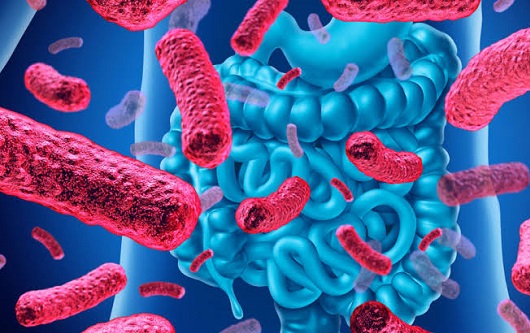
Whether a fecal transplant is effective does not depend on the quantity of “good” bacteria or the diversity of the transferred gut bacteria. Rather, key is whether the right strains can colonize the gut and displace existing ones. This is shown by a new study from the University of Bern and Inselspital, Bern University Hospital. The findings could help developing therapies based on gut bacteria in a more targeted manner and use them more effectively.
Bern, Aug 03, 2026.- Our gut is home to trillions of bacteria that help us digest food, strengthen our immune system, and protect us from disease. When this gut ecosystem breaks down – for example, following severe infections, antibiotic therapy, or chronic inflammation – fecal microbiota transplantation (FMT) is increasingly being used: Gut bacteria from a healthy donor are transferred to patients. FMT is highly effective for recurrent infections with the bacterium Clostridioides difficile. In contrast, its efficiency is far less predictable for inflammatory bowel diseases and other conditions. Why FMT works for some patients and not others has remained a puzzle.
A team led by Prof. Dr. Bahtiyar Yilmaz from the Department for Visceral Surgery and Medicine at Inselspital, Bern University Hospital, and the Department for Biomedical Research (DBMR) at the University of Bern has now investigated what happens in the gut after a fecal microbiota transplant: They were able to show that the gut acts like a selective filter – a strict “gatekeeper” that permanently accepts only certain bacterial strains. The key to the success of a fecal transplant is not the diversity or the dose of the transplanted bacteria, but whether the “good” bacterial strains establish themselves. The study, supported by the Swiss National Science Foundation and IBDNet (https://www.ibdnet.ch), was recently published in Cell Reports.
Bern as a leading European center for microbiome research
In their study, the research team examined the gut microbiome – the genetic component of the gut ecosystem – of 13 donor-recipient pairs using modern genetic methods. “The longitudinal FMT patient cohort established at the Department of Visceral Surgery and Medicine of Inselspital, Bern University Hospital is one of the few clinical sample and data collections worldwide that allows for a detailed investigation of fecal microbiota transplants,” explains Sebastian Jordi, an MD-PhD student at the DBMR and at the Department for Visceral Surgery and Medicine at Inselspital, Bern University Hospital. “The high-quality infrastructure at the University of Bern was essential for conducting the analyses.” In Bern, the Inselspital, the DBMR, and the Bern Center for Precision Medicine work closely together. “Together, these institutions have many years of experience researching the interaction between gut bacteria and their host,” Jordi continues.
The gut as a strict filter
Bahtiyar Yilmaz, lead author of the study explains: “If we look only at the species level, a fecal transplant often appears successful, since many of the transplanted bacteria at the species level successfully colonize the gut.” He adds: “However, when you look at the strain level – that is, not just the species, but the specific subgroup within it – it becomes clear that only a small fraction of these newcomers can truly establish themselves. The gut is much more selective than we had assumed.” This is particularly surprising in the case of the most common gut bacteria family, the Lachnospiraceae: They appear to colonize almost all patients, yet individual subgroups of this species almost never persist as donor strains. Rarer, specialized bacterial strains, on the other hand, do so much more reliably. “This is a paradox,” says Isabel Baertschi, first author of the study and a doctoral candidate at the DBMR at the University of Bern and the Department for Visceral Surgery and Medicine at Inselspital, Bern University Hospital. “It is precisely the bacteria that, at first glance, seem to colonize most successfully that are often the ones that fail in the long term. Simply counting species can therefore be highly misleading.” Bahtiyar Yilmaz illustrates it this way: “A fecal transplant is more like scattering seeds in a garden: Many germinate briefly, but only a few take deep root – which ones depends on the soil and the variety that was scattered.”
Which strains remain determines the success of the therapy
The team also studied patients who received multiple fecal transplants over the course of months or years. Their findings show that the gut bacteria constantly reorganize themselves rather than gradually forming a stable donor community in the gut – a sort of revolving-door effect occurs. Despite this constant change, the function of microbiome remained stable: Metabolic processes were largely maintained, even as the involved strains changed. Which strains establish themselves permanently is crucial for the clinical effect. “The patients whose condition improved significantly did not differ in terms of a radically different species composition,” says Yilmaz. “What distinguished this pattern, rather, was that a few new donor strains displaced the patients’ existing strains.” This points to a new principle in microbiome medicine: Apparently, what matters more than diversity or dose is whether certain strains are compatible with a given gut ecosystem and can establish themselves there permanently.
Towards more reliable microbiome therapies
The results suggest that future microbiome treatments and the screening of stool donors should no longer be evaluated solely based on species diversity, but rather specifically for suitable bacterial strains. Furthermore, the results support the future development of targeted mixtures of selected bacterial strains that can reliably colonize the gut and thus work more efficiently than previous fecal transplants. The research team now plans to conduct studies with a larger number of patients. In these studies, they aim to examine the immune system more closely, track the genetic information of the bacteria at a greater resolution, and determine through controlled experiments which strains actually influence recovery.
Publication details:
Baertschi I, Jordi SBU, Gardaz LJ, Bigi FV, Sokollik C, Juillerat P, Yilmaz B. Strain-level ecological filtering governs microbial colonization of the human gut. Cell Rep. 2026 Jul 28;45(8):117775. Epub ahead of print. PMID: 42519835.
URL: https://www.cell.com/cell-reports/pdfExtended/S2211-1247(26)00853-3
DOI: 10.1016/j.celrep.2026.117775.