




Washington, Nov 12, 2026.- The United States participated in World War I for 19 of the 52 months, yet its military medical advancements revolutionized trauma care, on and off the battlefield.
Congress formally declared war on Germany, April 6, 1917, bringing the U.S. into the global conflict that began July 28, 1914. Throughout the war, American medical teams turned wartime lessons into lasting medical innovations, enhancing combat care from front-line surgery and blood storage to mental healthcare and physical rehabilitation.
The conflict also accelerated breakthroughs in military-civilian partnerships, aviator healthcare and other wartime medical advances — reshaping military medicine and trauma care into a highly coordinated, lifesaving system.
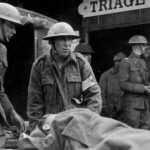
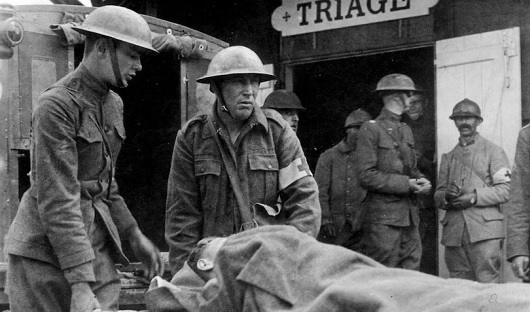
During the war, the U.S. rapidly deployed mobile hospitals near the front lines to care for the wounded and sick.
«Everyone learned that forward surgery reduced infection rates, sped up recovery and saved some lives,» said Sanders Marble, Army Medical Department Center of History and Heritage senior historian.
Forward surgical units «were not just to save lives but to benefit the military by returning more patients to duty and reducing the size of the hospital system through fewer infections and shorter hospital stays,» he said.
These forward surgical units paved the path for mobile surgical hospitals introduced in later U.S. conflicts.
Blood Innovations
As surgery moved closer to the front lines, the need for transportable, long-lasting blood storage became critical.
French and British military medical teams moved from a system of direct donor-recipient transfusion — connected by tubing stitched into the limb — to indirect transfusion using syringe-loads or bottled blood for a quicker transfusion period, according to Marble.
This new method, along with advances in preservatives and storing blood on ice, provided modest stockpiles of blood ahead of military operations.
Oswald Hope Robertson, a U.S. Army doctor attached to a British hospital, brought these advancements together to push an early blood bank forward. Using type O blood donors, Robertson created the first mobile blood banks for wounded service members.
Wartime Recovery
World War I saw an increased number of wounded, including those with limb amputations, neurological conditions and facial injuries, leading to an increased need for reconstructive efforts to support the warfighter after surgery, said Trenton Streck-Havill, National Museum of Health and Medicine assistant archivist.
Physical and occupational therapists served as reconstruction aides in stateside and French hospitals, helping patients regain movement, practice daily tasks and prepare for work after service. Streck-Havill called the integration of these fields «among the most revolutionary changes of the war.»
Marble said the Army saw the need for aides to provide full patient care through to rehabilitation during World War I. He said the results showed that early intervention both improved patient outcomes and shortened the rehabilitation process.
Alan Hawk, National Museum of Health and Medicine historical collections manager, called reconstruction aides the «founding mothers» of modern physical and occupational therapy, laying the foundation for the Army’s rehabilitation program in 1918.
The Army developed a more organized approach to studying and treating soldiers’ mental health during the war. Streck-Havill noted that terms such as «shell shock» and «war neuroses» started to become standard clinical language describing a range of psychological and nervous symptoms associated with combat.
Marble said the Army discovered that treating mental health on the front lines sped up recovery and reduced the severity of responses.
According to the U.S. Army Medical Command Center of History and Heritage, the U.S. Army Neurological Hospital No. 1 in Benoite Vaux, France, was opened in 1918 as a facility primarily for patients experiencing mental health challenges, staffed by neurologists and psychiatrists.
The general treatment of war neuroses at the time consisted of rest, persuasion, suggestion, work and psychological reeducation, according to the Army, with one of the most valuable assets in the treatment being the creation of a healing ward atmosphere.
The war also brought about the study of mental health and combat, leading to the first publication on the topic of war-related psychological distress.
Military-Civilian Medical Partnerships
As Army medical services were relatively small at the time, partnerships with civilian medical personnel and hospitals were vital to treating the large numbers of casualties.
American physicians who volunteered in European hospitals saw the scale of modern battlefield injuries and urged U.S. military leaders to prepare before entering the conflict, according to Marble.
In October 1915, Dr. George Crile, an American doctor who served with the British Expeditionary Force, proposed that major civilian hospitals organize «base hospitals» that could enter military service when needed. In 1916, the American Red Cross took responsibility for coordinating these units.
By the time the U.S. declared war, 33 base hospitals were ready for service. Some of these hospitals also supplied surgeons and nurses for forward-deployed surgical teams.
Marble noted these partnerships were vital to the war effort, given the Army’s limited medical personnel, equipment and hospital capacity.
As the first U.S. Army units operational in Europe, base hospitals mobilized quickly, served where needed, and provided a large supply of experienced and talented doctors who could be moved from affiliated units to where they were needed most, Marble said.
Partnerships with educational institutions also trained medical personnel by offering courses in orthopedic surgery, plastic surgery, neurosurgery, X-ray training and war surgery. Institutions including Yale University, Cornell University, and the Rockefeller Institute for Medical Research provided crucial training to civilian students — with many joining the Army Medical Corps as officers.
Specialized Aviator Medicine
World War I transformed aviation into a major tool of warfare, creating new demands for pilot health, fitness and readiness — establishing aviation medicine as a military specialty, according to the U.S. Air Force Medical Service. Aviation medicine supported readiness in three ways: selecting pilots, keeping pilots effective, and protecting trained personnel.
In 1918, the Army established the Medical Research Laboratory at Hazelhurst Field in Mineola, New York, to study how flight affected the human body. The lab began an aviation medicine education program for physicians, helping to establish specialized medical support for aircrews and laying the groundwork for today’s aerospace medicine.
When the United States entered World War I, its military medical system had to innovate under fire. Medics rapidly adopted and tested Allied techniques on the battlefield, forging a new framework that ultimately evolved into today’s Military Health System.
«Many of the foundational, structural elements of the modern U.S. Army and Navy Medical Corps, as well as those implemented by the Defense Health Agency, have their roots in restructuring of military medical deployment,» Streck-Havill said.