







Titin is a «titanically large» protein — the largest in the human body — which enables elastic movements of our muscles, including the heart. Mutations in the titin gene (TTN) that impair this function are the most frequent cause of a heart muscle disease known as dilated cardiomyopathy (DCM), whichContinuar Leyendo

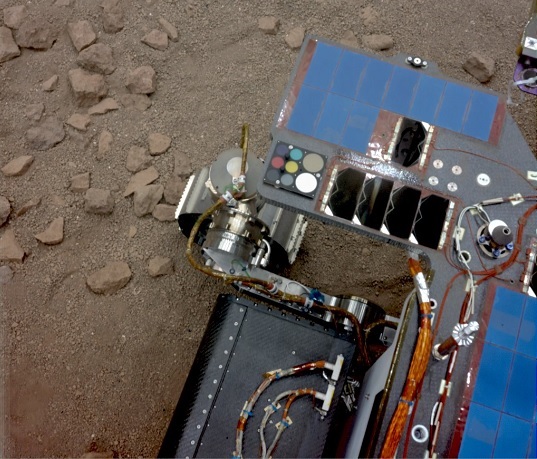
From panoramas to close-ups, from 3D maps to a wheel selfie, the Earth-bound twin of ESA’s Rosalind Franklin rover is testing the wide range of photo settings that will deliver the greatest science possible during the ExoMars mission on the Red Planet. París, Nov 08, 2021.- The scientific eyes ofContinuar Leyendo

Blocking a molecule that draws sensory nerves into musculoskeletal injuries prevents heterotopic ossification (HO), a process in which bone abnormally grows in soft tissue during healing, UT Southwestern researchers reported in a study. The findings, published in Nature Communications, suggest that drugs currently being tested in clinical trials to inhibitContinuar Leyendo

Among the neurotransmitters in the brain, dopamine has gained an almost mythical status. Decades of research have established its contribution to several seemingly unrelated brain functions including learning, motivation, and movement, raising the question of how a single neurotransmitter can play so many different roles. New York, November 02, 2021.-Continuar Leyendo

Developing a machine that processes information as efficiently as the human brain has been a long-standing research goal towards true artificial intelligence. An interdisciplinary research team at Heidelberg University and the University of Bern (Switzerland) led by Dr Mihai Petrovici is tackling this problem with the help of biologically-inspired artificialContinuar Leyendo

For the first time, researchers have used human data to quantify the speed of different processes that lead to Alzheimer’s disease and found that it develops in a very different way than previously thought. Their results could have important implications for the development of potential treatments. Cambridge, October 31, 2021.-Continuar Leyendo

An international team of researchers, led by University of Winnipeg palaeoanthropologist Dr. Mirjana Roksandic, has announced the naming of a new species of human ancestor, Homo bodoensis. This species lived in Africa during the Middle Pleistocene, around half a million years ago, and was the direct ancestor of modern humans.Continuar Leyendo