







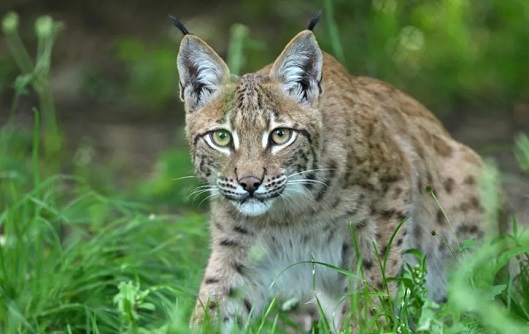
A study led by the University of Bern has identified a genetic variant in Swiss lynx that can cause fatal organ calcification in young animals. The disease occurs when animals inherit the genetic variant from both parents. The findings highlight the health consequences that low genetic diversity can have and underscore the importance of long-term monitoring of health and population trends, as well as interdisciplinary research, for the conservation of reintroduced wildlife populations.
Bern, Nov 16, 2026.- Switzerland is home to one of Europe’s most significant reintroduced populations of Eurasian lynx and therefore bears a special responsibility for conserving the species. The current population traces its origins to approximately 30 founder animals from the Slovak Carpathians, which were reintroduced to Switzerland in the 1970s. The small number of founder animals and subsequent inbreeding led to reduced genetic diversity and an increased risk of so-called inbreeding depression, which refers to the negative effects of inbreeding on the animals’ health and reproductive capacity.
Long-term health monitoring of the Swiss lynx population provides a unique basis for investigating the health consequences of genetic impoverishment following reintroduction. As part of this monitoring, young lynx in northeastern Switzerland were repeatedly found to have severe calcification of their internal organs, causing them to die before reaching adulthood. The characteristic disease pattern, the regional occurrence of the cases and the history of reintroduction suggested a hereditary disease.
Researchers from the Institute for Fish and Wildlife Health (FIWI) and the Institute of Genetics at the University of Bern have now provided strong support for this hypothesis in collaboration with the Swiss Federal Research Institute WSL, the KORA Foundation and the Institute of Veterinary Pathology. They were able to trace the fatal organ calcification in the young animals to a recessive genetic defect. For the first time worldwide, researchers have identified the genetic cause of a fatal hereditary disease in a wild animal population. The study was recently published in Nature Ecology & Evolution.
Genetic and pathological analyses
To determine the genetic cause of the disease, the research team has examined affected young animals in which the disease pattern had been documented between 2012 and 2023. The researchers combined veterinary, pathological and demographic data with various genetic analyses. They also employed methods from molecular and evolutionary biology. “This work highlights a particular strength of the Vetsuisse Faculty at the University of Bern: the ability to combine proven technical expertise and state-of-the-art analytical methods in close interdisciplinary collaboration, complemented by population genetics expertise from outside the faculty” says Prof. Dr Tosso Leeb, Director of the Institute of Genetics at the University of Bern and co-last author of the study. “This combination of long-term health monitoring, sample archives, genetic research and functional validation is exceptional in this close collaboration and creates ideal conditions for uncovering the health consequences of genetic impoverishment” adds Dr Mirjam Pewsner, Co-head of the Wildlife Department at FIWI and co-last author of the study.
A recessive genetic variant with fatal consequences
The study shows that the fatal calcifications observed in the affected young animals are caused by a recessively inherited genetic variant. Janna Niehaus, first author of the study and a doctoral student at FIWI, explains: “This fatal disease occurs only when an animal inherits the genetic variant from both parents. Animals that carry only one copy of the variant remain healthy but can pass it on to their offspring.” In a small and genetically impoverished population, such a variant can spread through what is known as the founder effect. Under the founder effect, some rare and, in certain cases, harmful genetic variants become common because a random segment of the genome is passed on by a founder animal to a very large number of offspring. “The combination of pathological examinations and genetic analyses enabled us to identify the cause of this disease” says Niehaus.
To improve connectivity between Swiss lynx populations, animals from the Alps and the Jura were relocated to northeastern Switzerland between 2001 and 2008. Some of these animals already carried the variant. It was precisely in this newly established population that cases of the disease occurred. Niehaus explains: “Genetic analyses have shown that, in this small, newly established population, the variant became more common because only a few animals passed their genes on to the next generation, and the disease manifested itself as a result of inbreeding.”
Foundations for future conservation measures
Long-term data series are of great value for conserving threatened wildlife species. The sample archives established at the Institute of Fish and Wildlife Health since the 1980s and the health data systematically collected since 2000 made it possible to identify the disease retrospectively, investigate its genetic cause and track its spread. “The results demonstrate the particular value of linking long-term health data with genetic and population biology analyses” says. Dr Christine Grossen, an evolutionary biologist at WSL and co-last author of the study. The results provide an important basis for successful reintroductions and the long-term conservation of species – from the careful selection of genetically diverse founder animals to promoting gene flow between existing populations. “When carrying out reintroductions, it is crucial to pay attention to the genetic diversity of the founder animals and to monitor the health and genetic development of the populations over the long term,” Niehaus concludes.
Publication details:
Niehaus J, Imlau M, Keller S et al. (2026) Lynx Reintroduction from a Bottlenecked Source Exposes a Lethal Genetic Defect. Nature Ecology and Evolution. Published online November 13, 2026.
URL: https://www.nature.com/articles/s41559-026-03204-0
DOI: 10.1038/s41559-026-03204-0